Guava Green Tea: Is It Good for You?
Guava green tea is green tea with guava fruit or flavor, and a few pieces add little beyond taste. We found no study of it. Guava leaf tea is a different herbal drink. The human trials we read on it were small and short, and they come from a review written by researchers at the company that sells one such tea.
On this page
“Guava tea” can mean two different drinks, and the research you’ll find online is about only one of them. Here’s how to tell them apart.
What’s the difference between guava green tea and guava leaf tea?
Guava green tea is green tea with guava fruit or guava flavor. The tea leaves come from Camellia sinensis, so it has caffeine. NCCIH says green tea as a drink has had no reported safety concerns in adults, but definite conclusions can’t be reached for most uses.
Guava leaf tea is made from the leaves of the guava tree, Psidium guajava. It’s an herbal product, not a true tea. Our page on whether green tea is an herbal tea explains the difference. We found no caffeine figure for guava leaf tea, so check the label.

Does guava green tea have benefits?
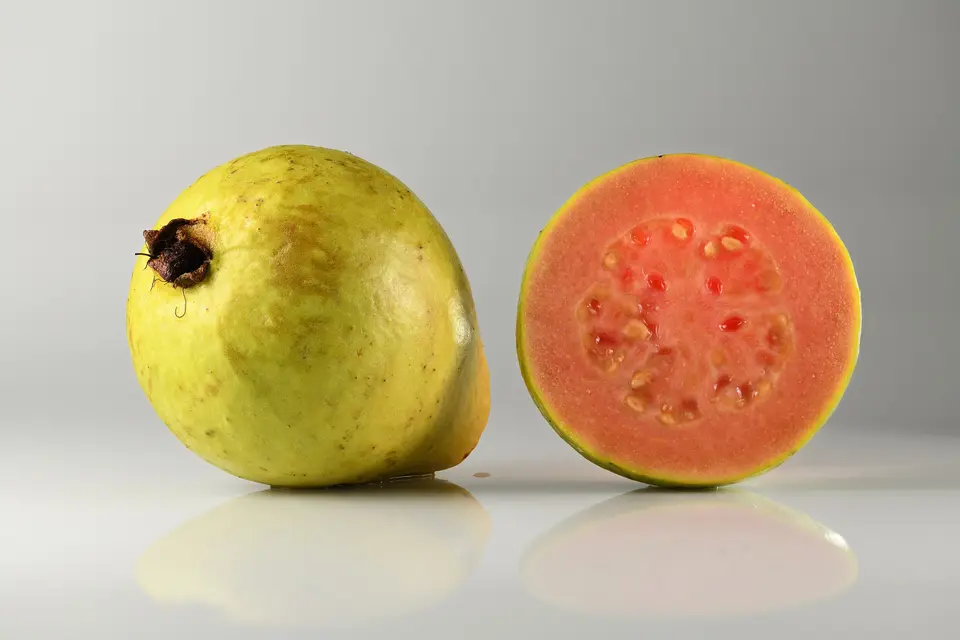
We found no study of guava fruit in green tea. Any benefit comes from the tea itself, and a few pieces of fruit won’t change that much. Guava has no caffeine: USDA lists 0 mg for raw common guava.
What’s in guava fruit?
Here’s what USDA lists for raw common guava, scaled to about a quarter of a fruit (14 g). USDA gives 55 g for one fruit without refuse.
| A quarter of a guava (about 14 g) | Amount |
|---|---|
| Calories | About 9 |
| Vitamin C | About 31 mg |
| Potassium | About 57 mg |
| Fiber | About 0.7 g |
USDA lists 228 mg of vitamin C per 100 g of raw guava, which is why the number looks high for such a small piece. Treat it as a ceiling. Fruit in a cup won’t hand over all of it, and the fiber stays in the fruit. For a citrus comparison, see our orange green tea page.
What does the research on guava leaf tea show?
It’s limited, and it’s about a different product. The main source we read is a 2010 review of guava leaf extract. Both authors work at Yakult’s research institute, the tea in the trials is Yakult’s Guava Leaf Tea, sold in Japan, and one author reports holding patents on the tea’s uses. Here’s what it describes:
- One meal: in a crossover study of 19 adults over 40, some with prediabetes, the tea (with about 400 mg of leaf extract) lowered the blood glucose response to 200 g of cooked rice by about 20%, compared with the same amount of hot water.
- Type 2 diabetes: in a crossover study of 20 hospital patients on their usual treatment, blood glucose 2 hours after a meal was about 160 mg/dL without the tea and 143 mg/dL with one serving. The drug voglibose lowered it more, to 133 mg/dL.
- Weeks of use: three trials of 8 to 12 weeks, with the tea taken at each meal, had 15 to 23 people, and some were on diabetes or cholesterol drugs. The review reports lower HbA1c in people who started with higher values.
These trials are small and short, and they used the company’s manufactured tea, not leaves steeped at home. The review was written by the company’s researchers, not by an independent team, so treat it as early evidence. None of this applies to guava green tea. If you take diabetes medication, ask your provider before using a leaf tea regularly.
How to make guava green tea
This makes one tall glass.
- Wash the guava under running water. The FDA recommends this and advises against soap, detergent or commercial produce wash.
- Heat 8 oz of water to 170°F to 180°F. Salada gives that range for green tea.
- Steep one green tea bag or 1 teaspoon of loose tea for 1 to 3 minutes, then remove it.
- Add two or three thin slices of ripe guava. Chill and pour over ice.
These are starting points, so adjust to taste. More ideas are in our green tea blends guide.
What about bottled guava green tea?
Bottled versions vary, and we didn’t open any brand’s label, so we don’t state ingredients or sugar here. Read the ingredient list and the Added Sugars line. The FDA says the Daily Value for added sugars is 50 g a day on a 2,000-calorie diet. The evidence for green tea doesn’t carry over to a sweetened flavored drink.
Who should be careful?
- Caffeine: USDA lists 12 mg of caffeine per 100 g of brewed green tea, about 28 mg in 8 fl oz. NCCIH says caffeine in pregnancy should stay at moderate levels, and to ask your provider.
- Latex allergy: a 2024 review lists guava among the foods that people with latex-fruit syndrome have reported reacting to. Ask your allergist if that applies to you.
- Medication: NCCIH reports that green tea at high doses can lower blood levels of the drug nadolol. Ask your pharmacist if you take regular medicine.
More on blends & add-ins
- Is Dragon Fruit Green Tea Good for You?
- Is Green Tea With Elderberry Good for You?
- Is Green Tea With Pomegranate Good for You?
- Is Mango Green Tea Good for You?
- Is Organic Peach Green Tea Good for You?
- Is Green Tea Considered an Herbal Tea?
- Orange Green Tea: Benefits and How to Make It
- Lychee Green Tea: Is It Good for You?
Sources
- Guavas, common, raw, USDA FoodData Central
- Beverages, tea, green, brewed, regular, USDA FoodData Central
- Green Tea: Usefulness and Safety, National Center for Complementary and Integrative Health
- Anti-hyperglycemic and anti-hyperlipidemic effects of guava leaf extract, Nutrition & Metabolism
- Revisiting Latex-Fruit Syndrome after 30 Years of Research: A Comprehensive Literature Review and Description of Two Cases, Journal of Clinical Medicine
- Selecting and Serving Produce Safely, U.S. Food and Drug Administration
- Added Sugars on the Nutrition Facts Label, U.S. Food and Drug Administration
- Brew Tea Temperature and Steeping Guide, Salada Tea