Lychee Green Tea: Is It Good for You?
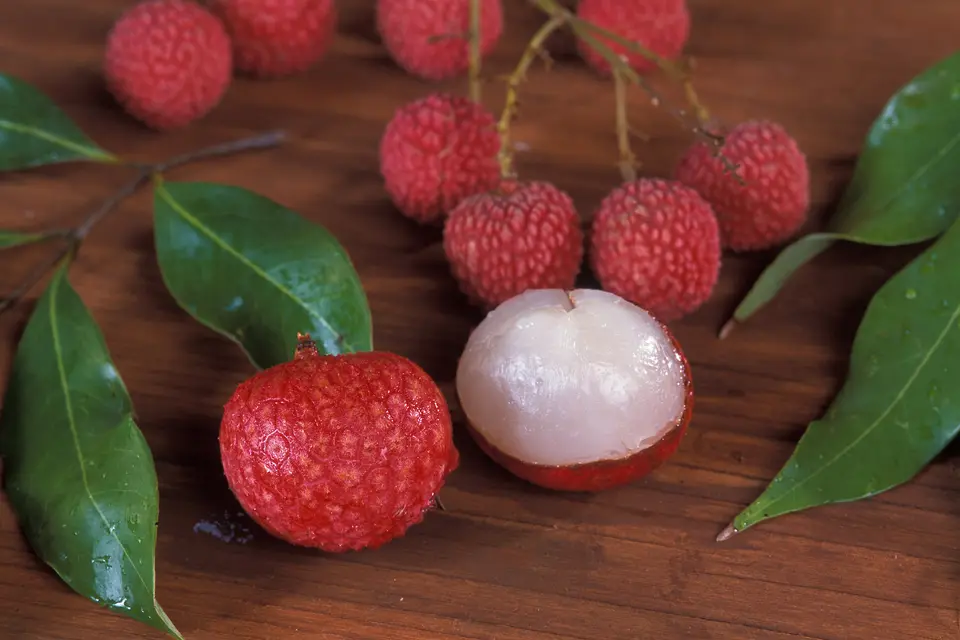
Lychee fruit has no caffeine, so any caffeine comes from the tea base. USDA data work out to about 28 mg per 8 fl oz of brewed green tea and about 47 mg for black tea. We found no human study of lychee in tea, so its benefits come from the tea, and a few lychees add little.
On this page
Lychee tea is a sweet, floral drink, and that’s its main appeal. Most of what it does for you comes from the tea, not the fruit, and a few pieces of lychee add very little.
Does lychee tea have caffeine?
The fruit doesn’t. USDA lists 0 mg of caffeine for raw lychees. Any caffeine in your cup comes from the tea base. Green, black and oolong tea all come from the same plant, Camellia sinensis, according to the National Center for Complementary and Integrative Health (NCCIH).
USDA FoodData Central lists caffeine per 100 g of each brewed drink. Here’s what that works out to for an 8 fl oz cup (about 237 g):
| Drink | USDA per 100 g | About per 8 fl oz |
|---|---|---|
| Brewed green tea | 12 mg | 28 mg |
| Brewed black tea | 20 mg | 47 mg |
| Brewed coffee | 40 mg | 95 mg |
Real cups vary with the tea, the amount and the steep time, so treat these as rough guides. Check which tea your lychee tea is made with, because some lychee teas are black. Harney & Sons lists its lychee tea as black tea and natural lychee flavor, and calls it caffeinated. Going by USDA’s figures, a black tea base usually means more caffeine than a green one. If you’re mixing the two, our page on mixing green and black tea shows how that changes the cup. For less caffeine, see decaf green tea.

What is lychee tea good for?
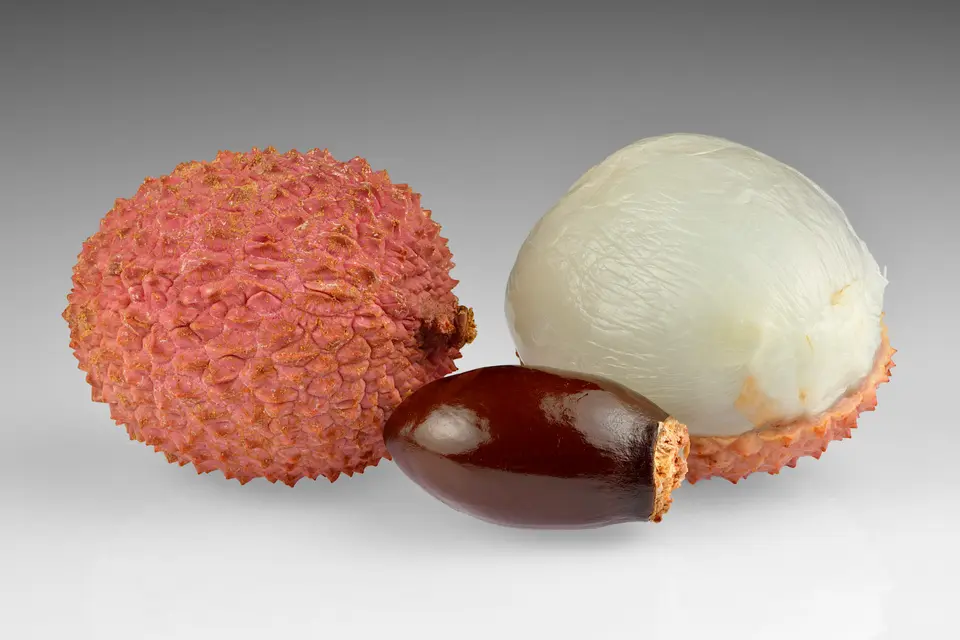
We found no human study of lychee in tea, so we can’t say the pair does more than the tea alone. We searched PubMed on November 2, 2026. The human trial we read tested Oligonol, a standardized polyphenol supplement made from lychee fruit extract. Its abstract says the flavanols in it come from lychee and tea. The 2025 study gave 200 mg a day or a placebo to 66 overweight Japanese adults for 12 weeks, and most of its authors list the company Amino Up as their employer. That’s a daily supplement, not a cup of tea with fruit in it, so it doesn’t apply to your drink.
What we can say is about the tea. NCCIH reports no safety concerns for green tea as a drink in adults. It also says definite conclusions can’t be reached for most uses.
What’s in the fruit?
Here’s what USDA lists for raw lychees, scaled to four fruits. USDA gives 9.6 g for one fruit without refuse (the peel and seed), so four is about 38 g.
| Four lychees (about 38 g) | Amount |
|---|---|
| Calories | About 25 |
| Vitamin C | About 27 mg |
| Potassium | About 66 mg |
| Fiber | About 0.5 g |
Treat that as a ceiling. Fruit steeping in tea won’t hand over all of it, and you only get the fiber if you eat the fruit.
Are bottled lychee green teas healthy?
It depends on the bottle. Some lychee teas are flavored rather than made with fruit: Harney’s ingredient list says “natural lychee flavor” and names no fruit. Bottled and café drinks can also contain sugar. We didn’t open any bottled brand’s label, so we don’t state a sugar figure here.
Read the Added Sugars line. The FDA says the Daily Value for added sugars is 50 g a day on a 2,000-calorie diet. Harvard’s Nutrition Source reports the American Heart Association suggests no more than about 24 g for most women and 36 g for most men. The evidence for green tea doesn’t carry over to a sweet drink. For a popular bottled example, see whether AriZona green tea is healthy.
How to make lychee green tea
This makes one tall glass.
- Heat 8 oz of water to 170°F to 180°F. Salada gives that range for green tea.
- Steep one green tea bag or 1 teaspoon of loose tea for 1 to 3 minutes, then remove it.
- Peel and pit three or four lychees. Add them to the warm tea.
- Chill, then pour over ice. Check canned lychees for added sugar.
For a black tea version, Salada suggests 190°F to 210°F and 3 to 5 minutes. These are starting points, so adjust to taste. You can find more ideas in our green tea blends.
Who should be careful?
- Caffeine: NCCIH says caffeine in pregnancy should stay at moderate levels, and to ask your health care provider.
- Medication: NCCIH reports that green tea at high doses can lower blood levels of the blood pressure drug nadolol. Ask your pharmacist if you take regular medicine.
- Sugar: if you track sugar, read the label on any bottle.
More on blends & add-ins
- Manuka Honey in Green Tea: Does It Add Anything?
- Orange Green Tea: Benefits and How to Make It
- Passion Fruit Green Tea: Is It Good for You?
- Tulsi and Green Tea: What Does Holy Basil Add?
- Can You Mix Green Tea and Black Tea? Yes, Here's How
- Is There a Decaf Green Tea?
- Is Green Tea With Pomegranate Good for You?
- Guava Green Tea: Is It Good for You?
Sources
- Litchis, raw, USDA FoodData Central
- Beverages, tea, green, brewed, regular, USDA FoodData Central
- Beverages, tea, black, brewed, prepared with tap water, USDA FoodData Central
- Beverages, coffee, brewed, prepared with tap water, USDA FoodData Central
- Green Tea: Usefulness and Safety, National Center for Complementary and Integrative Health
- Lychee Black Tea - Traditional Flavor, Harney & Sons
- Effects of Oligonol Supplementation on Abdominal Fat in Japanese Overweight Volunteers: A Randomized, Double-Blind, Placebo-Controlled, Parallel Group Study, Journal of Nutritional Science and Vitaminology
- Added Sugars on the Nutrition Facts Label, U.S. Food and Drug Administration
- Added Sugar, The Nutrition Source, Harvard T.H. Chan School of Public Health
- Brew Tea Temperature and Steeping Guide, Salada Tea