Is Organic Peach Green Tea Good for You?
Peach green tea is a fine drink for most adults, but a few slices or a flavoring add little, and we found no study in people of the tea itself. It has caffeine, about 29 mg per 8 oz for brewed green tea. The USDA Organic seal covers how ingredients were grown and handled, not nutrition.
On this page
Peach is one of the gentlest flavors you can add to green tea. Whether it makes the tea healthier is another matter. We searched PubMed and found no study in people of green tea with peach, so any benefit comes from the tea itself and from the small amount of fruit.
What does peach add to green tea?
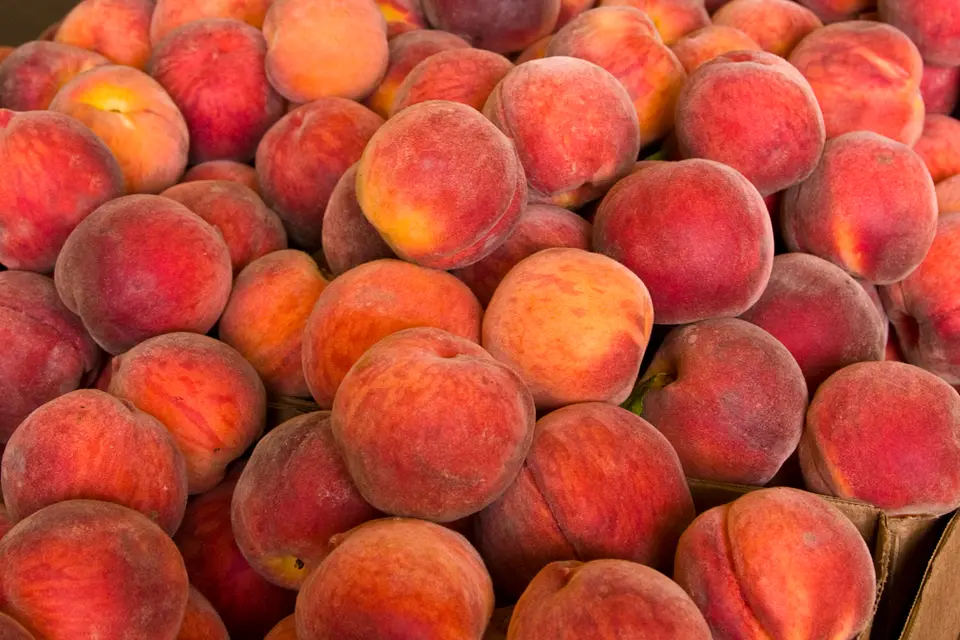
USDA lists raw yellow peaches as 88.9% water, with 39 calories per 100 g. A realistic amount for a mug is a quarter cup of slices (about 39 g). Scaled from USDA’s figures:
| A quarter cup of peach slices (about 39 g) | Amount |
|---|---|
| Calories | About 15 |
| Total sugars | About 3.2 g |
| Potassium | About 73 mg |
| Vitamin C | About 2.5 mg |
| Fiber | About 0.6 g |
Slices steeping in tea won’t give up all of that, so treat the table as a ceiling. Many peach teas use flavoring rather than fruit. FDA’s rules say a natural flavor can be derived from a fruit, but its significant function in the food is flavoring, not nutrition. Ingredients are listed in descending order by weight, so check where peach appears.

Is peach green tea good at night?
It has caffeine, so it may not be. USDA lists 12 mg of caffeine per 100 g of brewed green tea, about 29 mg in an 8 oz cup (245 g). Brewed coffee works out to about 95 mg per 8 oz cup. A peach-flavored bag or bottle may differ, so check the label.
Sensitivity varies a lot. FDA notes wide variation in how people respond to caffeine, and MedlinePlus says too much can cause insomnia. We found no source that gives a safe cutoff hour, so go by how you sleep. If a cup keeps you up, try it earlier in the day or look at decaf green tea. Our green tea caffeine guide covers more. A peach tea that lists no tea leaves, such as an herbal blend, is a different product, so read its label.
Is peach green tea good for weight loss?
There’s no proof that it is, and we found no study of peach tea and weight. For green tea, the National Center for Complementary and Integrative Health (NCCIH) says the catechins and caffeine in green tea and its extracts may have a modest effect on body weight, and that definite conclusions can’t yet be reached for most uses.
A 2012 Cochrane review of 12- to 13-week trials in overweight or obese adults found that green tea preparations, which it describes as extracts more concentrated than tea brewed from a bag, appear to cause a small weight loss that wasn’t statistically significant and was unlikely to matter clinically. Calories in the cup matter too. Sweetened bottled peach teas can carry added sugar, while an unsweetened cup with a few slices adds little.
What does the USDA Organic seal mean?
It’s about how the tea and its ingredients were produced, not about nutrition. USDA’s Agricultural Marketing Service (AMS) explains the basics:
- Only products labeled “100 percent organic” or “organic” may carry the USDA organic seal. “Organic” means at least 95% organic ingredients, excluding salt and water.
- A “made with organic” claim needs at least 70% organic ingredients, excluding salt and water, and can’t use the seal.
- Organic products must be produced without genetic engineering, ionizing radiation or sewage sludge, and organic practices aim to minimize synthetic materials.
- Organic doesn’t mean pesticide-free. Federal rules let organic farmers use approved substances, including some synthetic ones on the National List, when other pest controls aren’t enough.
- USDA-accredited certifiers inspect organic farms and businesses each year.
The AMS pages we read cover production, handling and labeling rules. They don’t claim that organic food has more nutrients, and they say nothing about caffeine or sugar. So check the label for both. Organic can matter to you for other reasons, but the seal doesn’t tell you how healthy the drink is.
How to make peach green tea
This makes one mug of about 8 oz.
- Heat 8 oz of water to 170°F to 180°F.
- Steep one green tea bag or 1 teaspoon of loose tea, following the package directions, then remove it.
- Add 3 or 4 thin slices of ripe peach, fresh or thawed from frozen.
- Drink it warm, or chill it and pour over ice.
If you like fruit and citrus together, try orange green tea or mango green tea. See all our green tea blends.
What about bottled peach green tea and “benefits for women”?
For bottles, read the Nutrition Facts label. FDA sets the Daily Value for added sugars at 50 g a day and calls 5% or less low and 20% or more high. Sugars from syrups, honey and concentrated fruit juice count as added sugars, and the numbers may cover one serving, not the whole bottle.
We found no research on peach tea in women specifically. The practical point is caffeine: NCCIH says intake in pregnancy shouldn’t exceed moderate levels, and that caffeine passes into breast milk. Ask your healthcare provider about your limit.
Who else should be careful?
- Medication: green tea at high doses can lower levels of the blood pressure drug nadolol. Ask your pharmacist if you take regular medicine.
- Liver: NCCIH says liver injury is uncommon and has been reported mainly with green tea extracts in tablet or capsule form.
More on blends & add-ins
- Is Raspberry Green Tea Good for You?
- Lavender Green Tea: What Are the Benefits?
- Lemon Ginseng Green Tea: What Are the Benefits?
- Lemongrass and Green Tea: What Are the Benefits?
- Lychee Green Tea: Is It Good for You?
- Is There a Decaf Green Tea?
- Orange Green Tea: Benefits and How to Make It
- Is Mango Green Tea Good for You?
- Green Tea With Ginger and Honey: What Are the Benefits?
Sources
- Peaches, yellow, raw, USDA FoodData Central
- Labeling Organic Products, U.S. Department of Agriculture, Agricultural Marketing Service
- USDA Certified Organic: Understanding the Basics, U.S. Department of Agriculture, Agricultural Marketing Service
- 7 CFR 205.301 Product composition, Code of Federal Regulations, via Cornell Law School Legal Information Institute
- 7 CFR 205.206 Crop pest, weed, and disease management practice standard, Code of Federal Regulations, via Cornell Law School Legal Information Institute
- Beverages, tea, green, brewed, regular, USDA FoodData Central
- Beverages, coffee, brewed, prepared with tap water, USDA FoodData Central
- Caffeine, MedlinePlus
- Spilling the Beans: How Much Caffeine Is Too Much?, U.S. Food and Drug Administration
- Green Tea, National Center for Complementary and Integrative Health
- Green tea for weight loss and weight maintenance in overweight or obese adults, Cochrane Database of Systematic Reviews
- Types of Food Ingredients, U.S. Food and Drug Administration
- 21 CFR 101.22 Foods; labeling of spices, flavorings, colorings and chemical preservatives, Code of Federal Regulations, via Cornell Law School Legal Information Institute
- Added Sugars on the Nutrition Facts Label, U.S. Food and Drug Administration
- Brew Tea Temperature and Steeping Guide, Salada Tea