Is Dragon Fruit Green Tea Good for You?
Dragon fruit green tea is a fine drink for most adults, but a few slices or dried pieces add little, and many versions use flavoring instead of fruit. We found no study in people of the tea itself. Brewed green tea has about 29 mg of caffeine per 8 oz.
On this page
Dragon fruit tea looks exotic, but the honest answer is modest. Green tea is the main ingredient, and a few slices or dried pieces of fruit add only a little. We searched PubMed and found no study in people of green tea with dragon fruit, so we can’t say the pair does more than the tea alone.
What does dragon fruit add to green tea?
Not much, and we can’t give reliable numbers. USDA FoodData Central has a “Dragon fruit” entry, but its nutrient values are borrowed in full from a generic “Fruit, NFS” (not further specified) entry, so they don’t describe dragon fruit itself. We found no dragon fruit analysis elsewhere in USDA’s databases, so we haven’t scaled those figures into a table.
What we can say is that the amount is small. USDA’s entry puts a cup of dragon fruit at 180 g, so a quarter cup for a mug is about 45 g of fruit. Slices steeping in tea won’t release everything in them, and the USDA entry doesn’t say whether the fruit is red- or white-fleshed.

Fresh, freeze-dried or “flavor”: what is in your cup?
These are three different products.
- Fresh slices or pieces: you get a small amount of real fruit, including some fruit sugar.
- Freeze-dried pieces: the fruit is there, but a label may not say how much. A small 2022 trial gave 19 healthy young adults 24 g of whole dragon fruit powder (with 33 mg of betalains) every day for 14 days, and 18 finished. Measures of blood vessel function improved compared with a placebo, and blood pressure didn’t change. They ate the powder. We can’t tell how that compares with a bag holding a few dried pieces, and the trial didn’t test tea.
- “Dragon fruit flavor”: FDA’s rules say a natural flavor can be derived from a fruit, but its significant function in the food is flavoring, not nutrition. FDA also says some ingredients can be grouped under “flavors” without naming each one. So a flavored tea may give you the taste without the fruit.
Check the ingredient list. FDA says ingredients appear in descending order by weight, so fruit listed near the end is a small part of the product.
Why is dragon fruit tea pink?
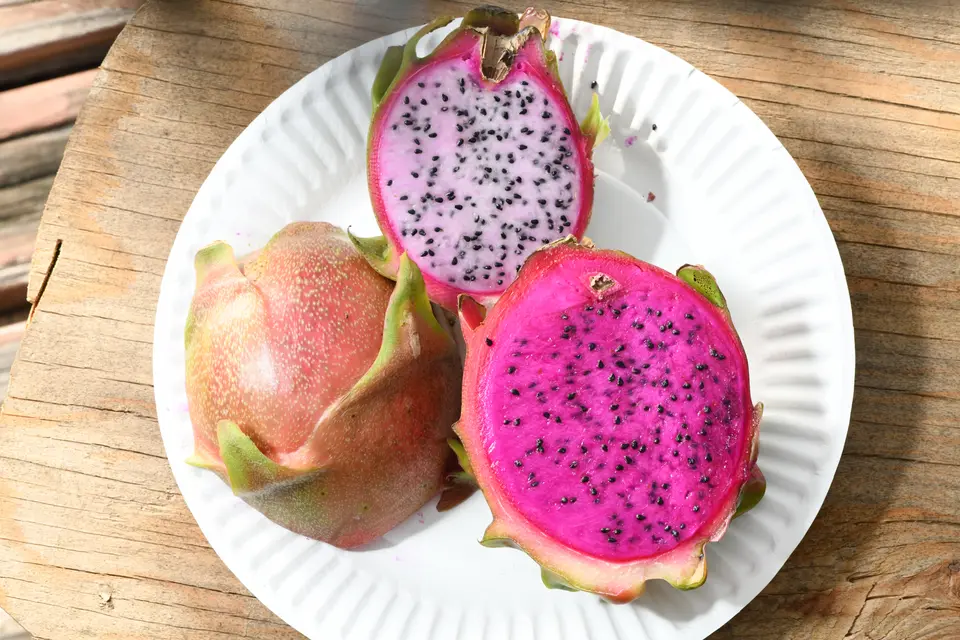
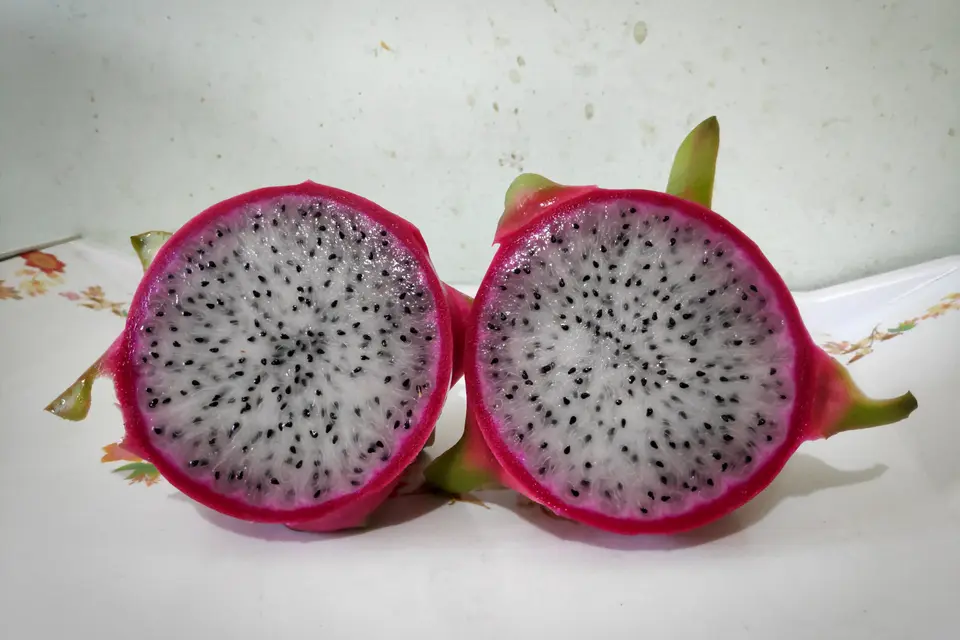
Red-fleshed dragon fruit (Hylocereus polyrhizus) gets its color from betalains. A 2024 review explains that betacyanins, a type of betalain, give the red-purple shades, and that white-fleshed types have a pink peel but white pulp. We found no study measuring betalains in brewed dragon fruit tea. A pink tea doesn’t prove there’s much fruit in it, so the ingredient list matters more than the color.
Is there evidence for the green tea part?
The National Center for Complementary and Integrative Health (NCCIH) says no safety concerns have been reported for green tea as a drink in adults, and that definite conclusions can’t yet be reached for most of the uses people try it for. It adds that the catechins and caffeine in green tea and its extracts may have a modest effect on body weight. It says liver injury is uncommon and has been reported mainly with green tea extracts in tablet or capsule form.
USDA lists 12 mg of caffeine per 100 g of brewed green tea, which works out to about 29 mg in an 8 oz cup (245 g). Brewed coffee works out to about 95 mg per 8 oz cup. A flavored bag or bottle may differ, so check the label.
How to make dragon fruit green tea
This makes one mug of about 8 oz.
- Heat 8 oz of water to 170°F to 180°F.
- Steep one green tea bag or 1 teaspoon of loose tea, following the package directions, then remove it.
- Let the tea cool a little. Add a quarter cup of fresh dragon fruit cubes, or a few freeze-dried pieces.
- Serve warm, or chill and pour over ice.
For a similar fruit and tea mix, see green tea with pomegranate or green tea with cucumber. More ideas are in our green tea blends guide.
What about bottled dragon fruit green tea?
Bottled versions vary in sugar, and we don’t know any one brand’s recipe. Read the Nutrition Facts label before you buy. FDA sets the Daily Value for added sugars at 50 g a day, calls 5% or less low and 20% or more high, and counts sugars from syrups, honey and concentrated fruit juice as added sugars. Check whether the numbers cover one serving or the whole bottle. Our page on whether AriZona green tea is healthy shows how to read one bottled brand.
Who should be careful?
- Caffeine: MedlinePlus says some people are more sensitive to caffeine, and that too much can cause insomnia. NCCIH says caffeine in pregnancy shouldn’t exceed moderate levels, so ask your healthcare provider.
- Medication: green tea at high doses can lower levels of the blood pressure drug nadolol. Ask your pharmacist if you take regular medicine.
More on blends & add-ins
See the full blends & add-ins guideSources
- Dragon fruit, USDA FoodData Central
- Betalain-rich dragon fruit (pitaya) consumption improves vascular function in men and women: a double-blind, randomized controlled crossover trial, American Journal of Clinical Nutrition
- The Profile of Phenolic Compounds Identified in Pitaya Fruits, Health Effects, and Food Applications: An Integrative Review, Plants
- Green Tea, National Center for Complementary and Integrative Health
- Types of Food Ingredients, U.S. Food and Drug Administration
- 21 CFR 101.22 Foods; labeling of spices, flavorings, colorings and chemical preservatives, Code of Federal Regulations, via Cornell Law School Legal Information Institute
- Added Sugars on the Nutrition Facts Label, U.S. Food and Drug Administration
- Caffeine, MedlinePlus
- Beverages, tea, green, brewed, regular, USDA FoodData Central
- Beverages, coffee, brewed, prepared with tap water, USDA FoodData Central
- Brew Tea Temperature and Steeping Guide, Salada Tea