Green Tea With Almonds: Almond Milk, Flavor and Benefits
People mean three things by this: green tea with almond milk, almond-flavored green tea, or eating almonds with tea. We found no study in people of any of them together. The evidence is about green tea and about eating whole almonds. Almonds are a tree nut allergen.
On this page
“Green tea and almond” can mean three different cups, so here’s each one. We searched PubMed and found no study in people of green tea with almond milk, almond flavoring or almonds as a combined drink. Any benefit you read about belongs to the tea, or to almonds eaten as food.
Is green tea with almond milk good for you?
It’s a fine way to soften green tea, and almond milk is easy to add. For a splash of about 1/4 cup, USDA data for unsweetened almond milk works out like this. The calcium figure comes from the manufacturer data in that USDA entry, and brands differ, so check your label.
| Per 1/4 cup (about 65 g) of unsweetened almond milk | Amount |
|---|---|
| Calories | About 10 |
| Protein | About 0.3 g |
| Sugars | About 0.5 g |
| Calcium | About 120 mg |
Those are our figures, scaled from USDA’s per-100 g data. Sweetened almond milk adds sugar, so check the label.
Does the milk dull the tea? Harvard’s Nutrition Source says some research suggests the protein, and possibly the fat, in dairy milk may reduce the antioxidant capacity of tea. It also says tea with a splash of milk can still be a healthful drink. Another lab test went the other way on a different measure. Mixing bovine, soy or rice milk into green tea at 50% raised the share of catechins left after simulated digestion, from under 20% to 52% to 69%. That test was done in a dish, not in people, and it didn’t include almond milk. The closest we found was a 2026 lab study that mixed tea polyphenols, plus a lemon oil, into almond milk and ran simulated digestion. That tells you nothing about a mug of brewed green tea, so we can’t say how almond milk compares. For other additions, see whether you can put cream in green tea or try green tea with coconut water.

What is almond-flavored green tea?
It’s green tea with almond taste added. A tea box can mean almond pieces, almond extract or “natural flavor,” so read the ingredient list. We found no research on almond-flavored tea, which is why “almond tea benefits” searches turn up nothing solid.
For green tea itself, the National Center for Complementary and Integrative Health (NCCIH) says no safety concerns have been reported for it as a drink in adults. It also says firm conclusions can’t be reached yet for most uses.
Do almonds eaten with green tea add benefits?
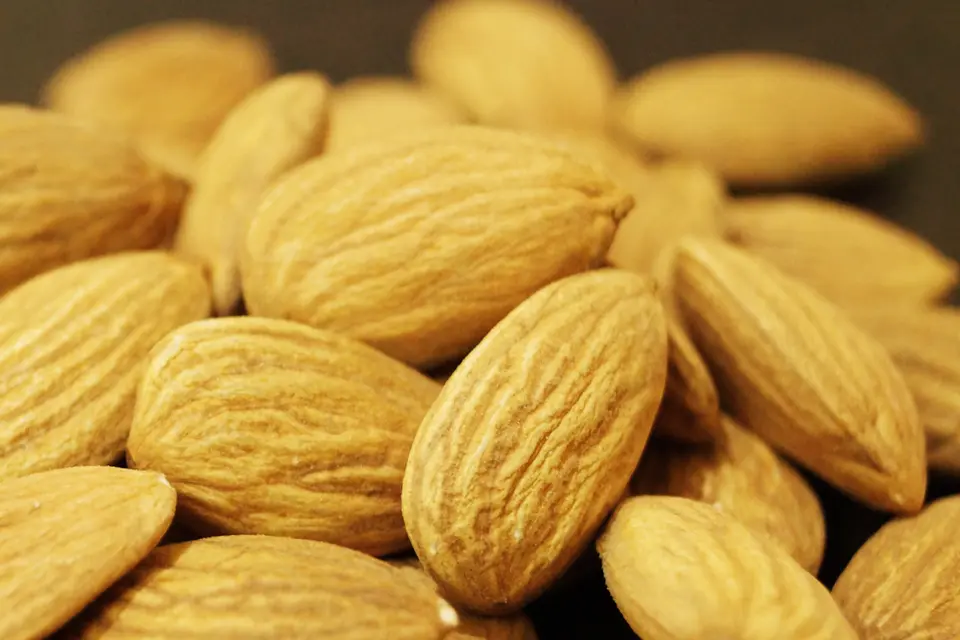
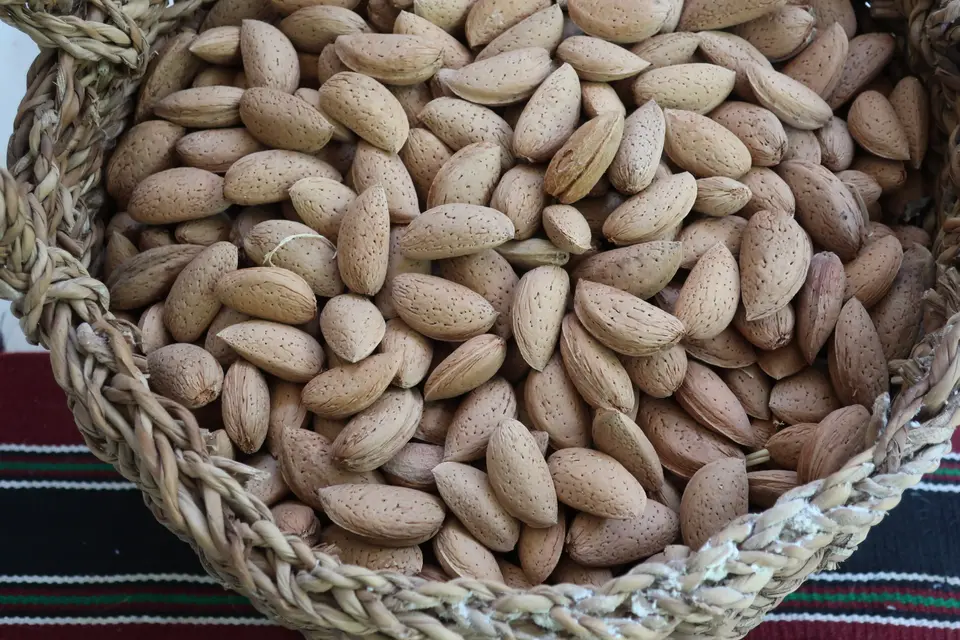
Almonds are food, and they have their own research. One ounce of whole almonds (about 23 kernels) has about 164 calories, 6 g of protein, 14 g of fat, 3.5 g of fiber and 7.3 mg of vitamin E, per our math from USDA data.
A 2025 review of 36 publications covering 2,485 adults found that eating almonds for at least 4 weeks lowered LDL cholesterol by about 0.13 mmol/L, roughly 5 mg/dL by our conversion. That is a small drop. The review was funded by a grant from the Almond Board of California, and its authors work for Intertek Health Sciences, which provides paid consulting to the Almond Board. The authors state the Almond Board had no role in the study design, analysis or writing. It tells you about eating almonds, not about almond milk or flavor in your tea.
How to make green tea with almond
With almond milk
- Heat water to 170°F to 180°F.
- Steep one green tea bag or 1 teaspoon of loose tea for 2 to 3 minutes.
- Remove the tea. Warm 1/4 cup of almond milk and stir it in.
- Sweeten only if you want to.
With almond flavor
- Brew the green tea as above.
- Add a drop or two of pure almond extract. It’s strong, so go slowly.
- Add a few sliced almonds on top, or eat a small handful on the side.
These are starting points. Adjust to taste. For a heartier snack with tea, try green tea and chia seeds, or browse more green tea blends.
Who should be careful?
- Tree nut allergy: the FDA lists tree nuts among the nine major food allergens, and labels must name the type, such as almonds. If you have a tree nut allergy, skip almond milk and almonds, read the label on almond-flavored tea, and ask your allergist before using almond extract or flavoring.
- Caffeine: green tea has about 29 mg per 8 oz, according to Mayo Clinic. USDA lists 0 mg of caffeine for unsweetened almond milk.
- Medication: green tea at high doses can lower levels of the blood pressure drug nadolol, NCCIH reports. Ask your pharmacist if you take regular medicine.
More on blends & add-ins
- Green Tea With Coconut Water: Can You Mix Them?
- Green Tea With Cucumber: What Does It Add?
- Green Tea With Ginger and Honey: What Are the Benefits?
- Green Tea With Turmeric: What Are the Benefits?
- Is Green Tea With Elderberry Good for You?
- Can You Put Cream in Green Tea?
- Green Tea and Chia Seeds: Can You Have Them Together?
Sources
- Beverages, almond milk, unsweetened, shelf stable, USDA FoodData Central
- Nuts, almonds, USDA FoodData Central
- Food Allergies, U.S. Food and Drug Administration
- Blood Lipid Levels in Response to Almond Consumption: A Systematic Review and Meta-Analysis of Randomized Controlled Trials, Nutrients
- Tea, The Nutrition Source, Harvard T.H. Chan School of Public Health
- Self-assembled Citrus × Limon 'Rosso' essential oil-tea polyphenol colloids modulate macronutrient digestion and enhance polyphenol bioaccessibility in an almond milk tea model system, Food Chemistry
- Common tea formulations modulate in vitro digestive recovery of green tea catechins, Molecular Nutrition and Food Research
- Green Tea, National Center for Complementary and Integrative Health
- Caffeine content for coffee, tea, soda and more, Mayo Clinic
- Brew Tea Temperature and Steeping Guide, Salada Tea