Can You Put Cream in Green Tea?
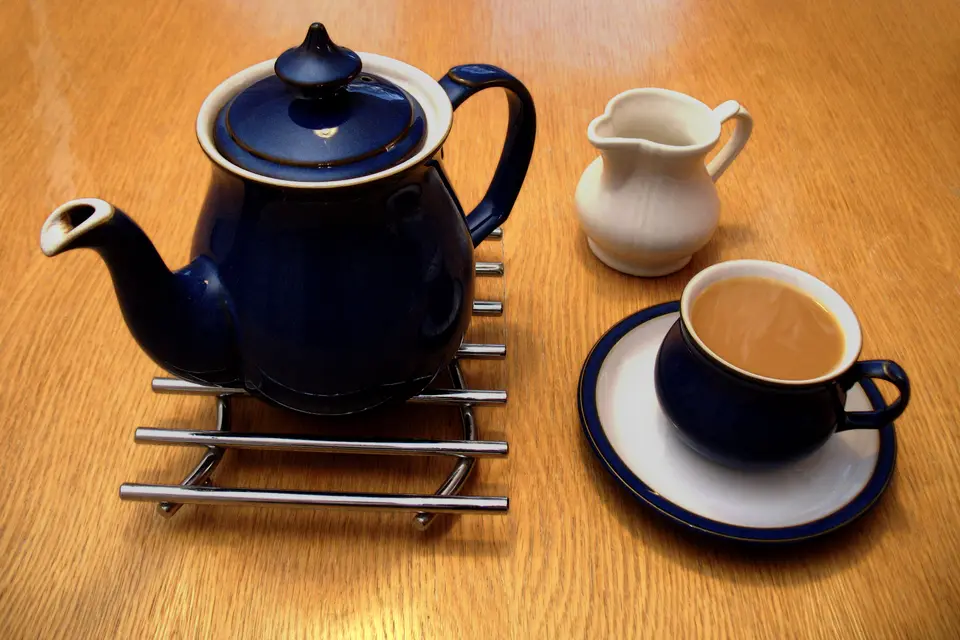
Yes. A lab test suggests cream can soften green tea's astringent edge, and it adds calories. Matcha lattes are a popular example of tea with milk. Human studies disagree on whether milk reduces catechin absorption, and we found none that tested cream itself.
On this page
You can put cream in green tea. The real questions are whether you’ll like the taste and whether it changes what you get from the tea. The taste part is simple. The catechin part isn’t settled.
What does cream do to green tea’s taste?
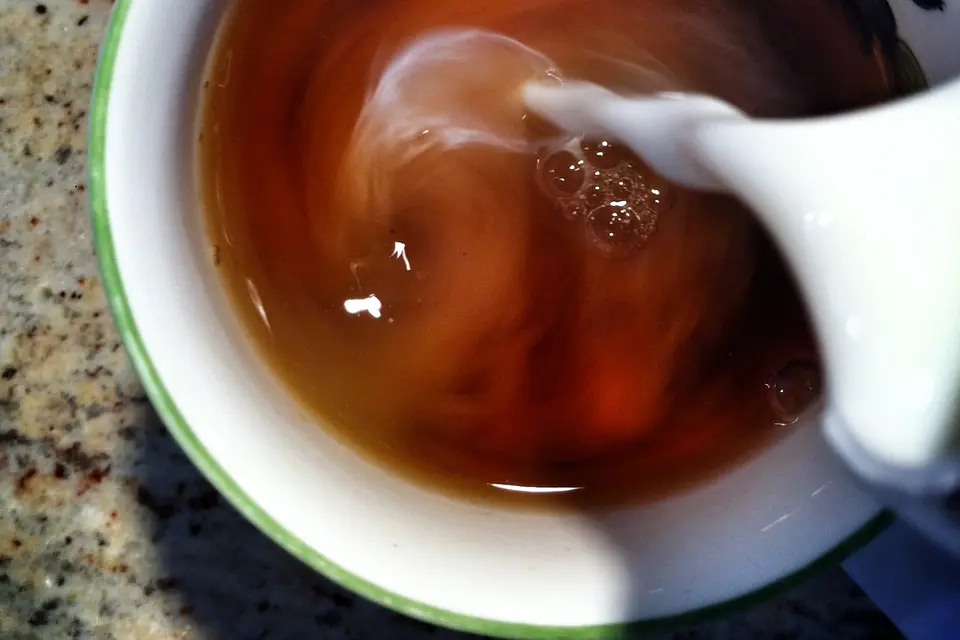
It likely softens it. Catechins give green tea its astringent, mouth-drying edge, and milk components reduced that in lab tests. In one Japanese lab study, milk, skim milk and a dilute 3.8% cream solution each cut the astringency of a catechin solution by about 58% to 65%. That was a test solution, not a brewed cup or straight cream, so treat the number as a guide and not as a promise for your mug.
Cream also adds richness and calories. Whether that suits plain green tea is personal, so start small:
- Brew your green tea as usual, or a little stronger.
- Stir in 1 teaspoon of cream or half-and-half.
- Taste, then add more if you like it.

What works best in green tea?
Matcha lattes are the natural example. Clemson Cooperative Extension describes a matcha latte as matcha, water and milk, and says it’s popular in the United States as a way to cut matcha’s bitterness. Its recipe uses 1 to 2 teaspoons of matcha, ¼ cup of hot water and ¾ cup of milk. If you drink matcha often, see our page on matcha and lead.
Here’s how common options compare per tablespoon:
| 1 tablespoon | Calories | Fat | Protein |
|---|---|---|---|
| Heavy cream | 51 | 5.4 g | 0.4 g |
| Half-and-half | 20 | 1.7 g | 0.5 g |
| Whole milk | 9 | 0.5 g | 0.5 g |
| Unsweetened soy milk | 5 | 0.2 g | 0.4 g |
| Unsweetened almond milk | 2 | 0.2 g | 0.1 g |
| Canned coconut milk | 30 | 3.2 g | 0.3 g |
| Sweetened coconut milk drink | 5 | 0.3 g | Under 0.1 g |
We scaled these from USDA values per 100 g, using USDA’s tablespoon weight, or a cup divided by 16 where USDA lists no tablespoon. Brands vary, so check your label.
Is green tea with almond milk good for you?
We found no human study on green tea with almond milk, so we can’t point to a proven benefit from the pairing. The practical appeal is that unsweetened almond milk adds very few calories. Sweetened versions add sugar, so read the label.
Can you put coconut milk in green tea?
Yes. Canned coconut milk is rich, at about 30 calories per tablespoon, so a small amount goes a long way. Carton coconut milk drinks are much lighter, but USDA’s listing is for a sweetened version. As with almond milk, we found no human study on this pairing.
Does milk affect green tea catechins?
Maybe. Human studies disagree, and only some tested green tea.
| Study | Tea tested | Added | Finding |
|---|---|---|---|
| Serafini, 1996 | Green and black, 5 adults each | 100 mL whole milk | Rise in blood antioxidant capacity was fully blocked |
| Leenen, 2000 | Green and black, 21 adults | Milk | Rise in blood antioxidant activity was unchanged |
| Egert, 2013 | Green tea extract, 24 women | Skim milk, casein or soy protein | EGCG absorption fell to 63% to 76% of control, but two other catechins rose |
| Van het Hof, 1998 | Black, 12 adults | 100 mL semi-skimmed milk in 600 mL | Blood catechins not significantly changed |
| Kyle, 2007 | Black | Milk | Rise in blood catechins and antioxidant capacity was unchanged |
| Reddy, 2005 | Black, adult men | Milk | Blood catechins were lower, but antioxidant measures didn’t change |
| Lorenz, 2007 | Black, 16 women | 10% skim milk | Tea’s improvement in blood vessel function was fully blocked |
In the Egert study, total catechin absorption with skim milk was 87% of the control. EGCG, the catechin most people ask about, was 68%. Absorption of the catechins EGC and EC rose to 134% and 125%. Soy protein, tested alone and not as soy milk, also lowered EGCG, to 76%, so soy milk may not avoid the issue.
A 2017 review calls the evidence conflicting. It points to differences in tea type, milk type and amount, preparation, lab methods and sample size. It says binding between catechins and caseins, a type of milk protein, could explain a drop in antioxidant activity, though other mechanisms are also possible.
Three limits matter when you read these studies:
- Different measures: blood antioxidant tests don’t measure catechin absorption directly, and the Lorenz study measured blood vessel function.
- Different amounts: 100 mL of milk is far more than a splash of cream.
- No cream data: we found no human study that tested cream in green tea. A tablespoon of cream has about as much protein as a tablespoon of milk, but a lab study of black tea suggests fat content may also change the effect. We can’t say which way cream goes.
Almond and coconut milks have less protein, so they may bind less catechin. That’s our inference, not a tested result.
Should you skip cream to get more from your tea?
Only if catechins are your main reason for drinking it. Plain tea is the one option that avoids the question. If that’s your goal, also look at which green teas have the most EGCG.
Keep the stakes in proportion, though. NCCIH says definite conclusions can’t yet be reached on whether green tea helps with most of the things it’s used for, so any catechin loss has an uncertain effect on health. If a splash of cream is what makes you enjoy the cup, that’s a fair reason to use it. Just count the calories if you use a lot, and avoid any milk you’re allergic to.
For more ideas, browse our green tea blends.
More on blends & add-ins
- Green Tea and Chia Seeds: Can You Have Them Together?
- Green Tea and Mint Tea: Differences, Benefits and Mixing
- Green Tea With Almonds: Almond Milk, Flavor and Benefits
- Green Tea With Coconut Water: Can You Mix Them?
- Green Tea With Cucumber: What Does It Add?
- Does Matcha Contain Lead?
- Which Green Tea Has the Highest EGCG?
- Green Tea With Ginger and Honey: What Are the Benefits?
Sources
- Suppression of catechin astringency by milk components, Milk Science
- What Is Matcha? A Guide to This Traditional Green Tea Powder, Clemson Cooperative Extension, Home & Garden Information Center
- In vivo antioxidant effect of green and black tea in man, European Journal of Clinical Nutrition
- A single dose of tea with or without milk increases plasma antioxidant activity in humans, European Journal of Clinical Nutrition
- Simultaneous ingestion of dietary proteins reduces the bioavailability of galloylated catechins from green tea in humans, European Journal of Nutrition
- Bioavailability of catechins from tea: the effect of milk, European Journal of Clinical Nutrition
- Effects of infusion time and addition of milk on content and absorption of polyphenols from black tea, Journal of Agricultural and Food Chemistry
- Addition of milk prevents vascular protective effects of tea, European Heart Journal
- Addition of milk does not alter the antioxidant activity of black tea, Annals of Nutrition and Metabolism
- Addition of whole, semiskimmed, and skimmed bovine milk reduces the total antioxidant capacity of black tea, Nutrition Research
- Addition of milk to tea infusions: Helpful or harmful? Evidence from in vitro and in vivo studies on antioxidant properties, Critical Reviews in Food Science and Nutrition
- Green Tea, National Center for Complementary and Integrative Health
- Cream, fluid, heavy whipping, USDA FoodData Central
- Cream, fluid, half and half, USDA FoodData Central
- Milk, whole, 3.25% milkfat, with added vitamin D, USDA FoodData Central
- Soymilk (all flavors), unsweetened, with added calcium, vitamins A and D, USDA FoodData Central
- Beverages, almond milk, unsweetened, shelf stable, USDA FoodData Central
- Nuts, coconut milk, canned (liquid expressed from grated meat and water), USDA FoodData Central
- Beverages, coconut milk, sweetened, fortified with calcium, vitamins A, B12, D2, USDA FoodData Central