Green Tea With Turmeric: What Are the Benefits?
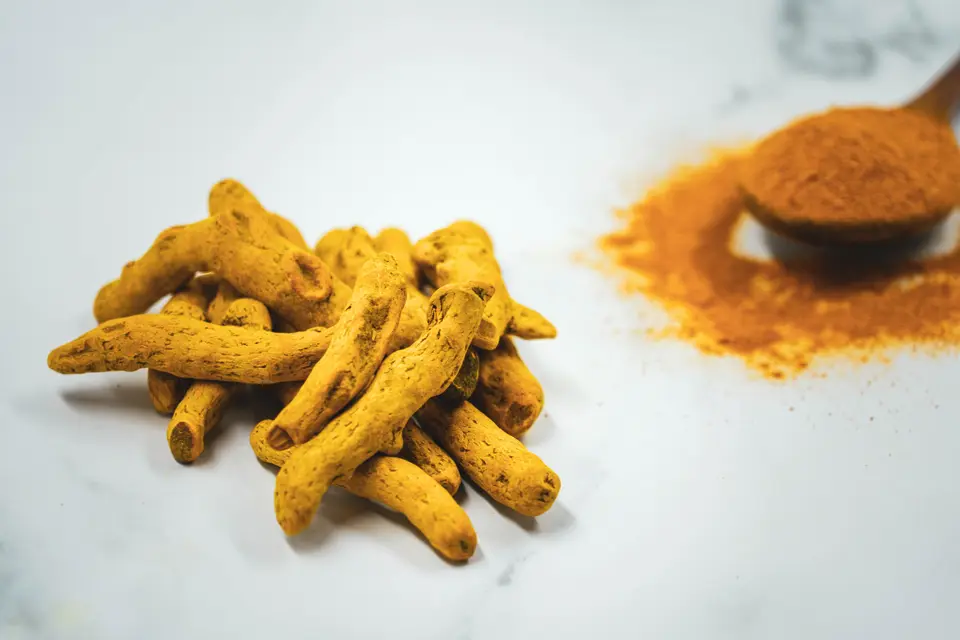
Yes, most adults can drink green tea with a little turmeric. We found no study of brewed tea with turmeric spice, and the turmeric research tested concentrated curcumin, not a pinch of spice. The caffeine, about 29 mg per 8 oz, comes from the tea.
On this page
Green tea and turmeric make a warm, earthy cup that most adults can drink. What we can’t tell you is that the mix does anything special. We found no study of brewed green tea with turmeric spice, and the turmeric research is mostly about concentrated curcumin.
What does the research say?
Turmeric is a plant in the ginger family, and curcumin is a major compound in it that gives the spice its yellow color. The National Center for Complementary and Integrative Health (NCCIH) says we don’t know enough to say that turmeric or curcumin helps with any health purpose. For knee osteoarthritis, it calls the early evidence positive but says better studies are needed.
For green tea, NCCIH says firm conclusions can’t yet be reached for most uses. The small drop in cholesterol it describes came mostly from extract supplements, not brewed tea.
| What was studied | What it tells you about your cup | |
|---|---|---|
| Turmeric | Oral turmeric or curcumin products, often with added piperine from black pepper | Not much. A pinch of spice isn’t that product |
| Green tea | Mostly extract supplements | Little for most uses |
| Both together | A lab study, and a trial of a green tea extract and curcumin drink | Nothing about a homemade cup |
The two combined studies are narrow. A lab study of curcumin mixed with epicatechin, a green tea compound, or with a green tea fraction found antioxidant effects that were additive, synergistic or antagonistic depending on the test setup and the ratio. A trial gave people with beta-thalassemia, who were also on standard iron-removal treatment, a drink made from green tea extract and curcumin, and reported lower blood urea nitrogen. Neither used a cup of tea with a spoonful of spice.
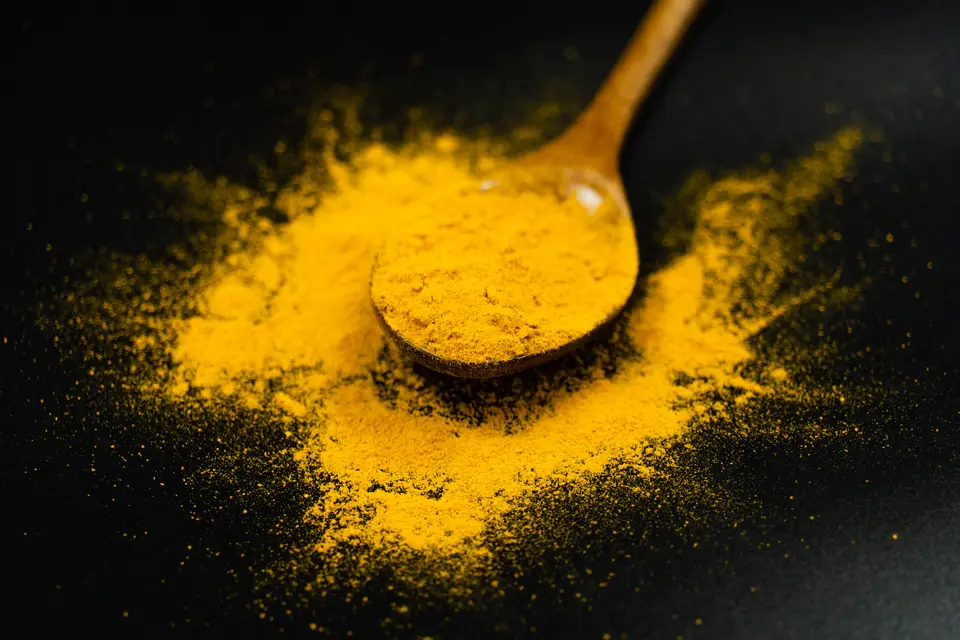

How much curcumin is in a cup?
Very little compared with the studies. This is our own estimate:
- USDA lists 1 teaspoon of ground turmeric as 3 g, so 1/4 teaspoon is about 0.75 g.
- A lab analysis of 28 turmeric and curry powder products found that pure turmeric powders had the most curcumin, averaging 3.14% by weight.
- Using that average, 1/4 teaspoon holds about 24 mg of curcumin (0.75 g x 3.14%). Your spice may have more or less, and some may stay behind in the strainer.
Trials in a 2017 review used doses such as 500 mg to 1 g a day, often with piperine. The same review says curcumin has poor bioavailability, mainly from poor absorption, rapid breakdown and rapid elimination. So results from supplements don’t carry over to a cup of tea.
How to make green tea with turmeric
This makes one mug of about 8 oz.
- Heat water to 170°F to 180°F.
- Stir in 1/4 teaspoon of ground turmeric. Add a tiny pinch of black pepper if you like the taste.
- Add one green tea bag or 1 teaspoon of loose green tea. Steep for 2 to 3 minutes.
- Strain through a fine strainer or take out the bag. Stir before sipping, since ground turmeric doesn’t fully dissolve.
These amounts are starting points. Turmeric is strong, so start small. For another spice-forward blend, see ginger and honey green tea, or browse more green tea blends.
Does black pepper make turmeric work better?
In supplements, yes. NCCIH notes that combining curcumin with piperine from black pepper is one way to improve how much curcumin the body absorbs. That point is about supplement products. We found no data on a pinch of pepper in tea, so treat it as a flavor choice.
How much caffeine is in it?
The caffeine comes from the green tea. Mayo Clinic lists about 29 mg for 8 oz of brewed green tea. Turmeric doesn’t add any: Harvard’s Nutrition Source lists turmeric among the naturally caffeine-free herbal teas, and USDA lists 0 mg for ground turmeric. For a lighter cup, try a decaf, like Bigelow’s decaf green tea.
Who should be careful?
- Supplements: NCCIH says liver damage has been reported in some people who took highly bioavailable curcumin products. It reports uncommon liver injury with green tea too, mainly from extract tablets or capsules. A cup of tea isn’t either of those, but ask a clinician before taking both as supplements.
- Pregnancy and breastfeeding: NCCIH says turmeric supplements during pregnancy may be unsafe. Little is known about amounts larger than food amounts while breastfeeding. Keep caffeine moderate.
- Medication: green tea at high doses can lower levels of the blood pressure drug nadolol. NCCIH advises asking your provider before using any herbal product if you take medicine.
- Stomach upset: oral turmeric can cause nausea, acid reflux, stomach upset, diarrhea or constipation. Use less or skip it if that happens.
More on blends & add-ins
See the full blends & add-ins guideSources
- Turmeric: Usefulness and Safety, National Center for Complementary and Integrative Health
- Green Tea, National Center for Complementary and Integrative Health
- Curcumin: A Review of Its' Effects on Human Health, Foods
- Curcumin content of turmeric and curry powders, Nutrition and Cancer
- Spices, turmeric, ground, USDA FoodData Central
- Synergistic, additive, and antagonistic antioxidant effects in the mixtures of curcumin with (-)-epicatechin and with a green tea fraction containing (-)-epicatechin, Food Chemistry
- Consumption of a green tea extract-curcumin drink decreases blood urea nitrogen and redox iron in beta-thalassemia patients, Food and Function
- Tea, The Nutrition Source, Harvard T.H. Chan School of Public Health
- Caffeine content for coffee, tea, soda and more, Mayo Clinic
- Brew Tea Temperature and Steeping Guide, Salada Tea