Green Tea With Coconut Milk: What Does It Add?
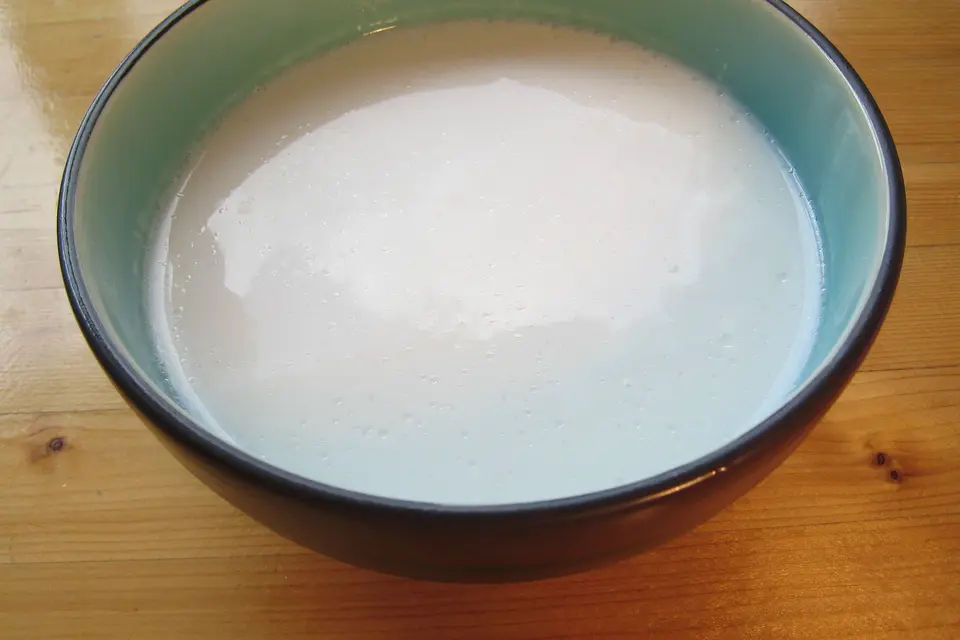
Yes, and it makes green tea creamy. Canned coconut milk has about 30 calories and 2.8 g of saturated fat per tablespoon, while a carton coconut milk drink has far less. We found no study of green tea with coconut milk, so any benefit comes from the tea.
On this page
Coconut milk gives green tea a rich, mellow body, and that’s the best reason to try it. The numbers that matter are the calories and saturated fat, and they depend on which kind of coconut milk you pour. We searched PubMed and found no study of green tea with coconut milk, so we can’t point to a benefit from the pair.
What’s the difference between canned coconut milk and coconut milk drink?
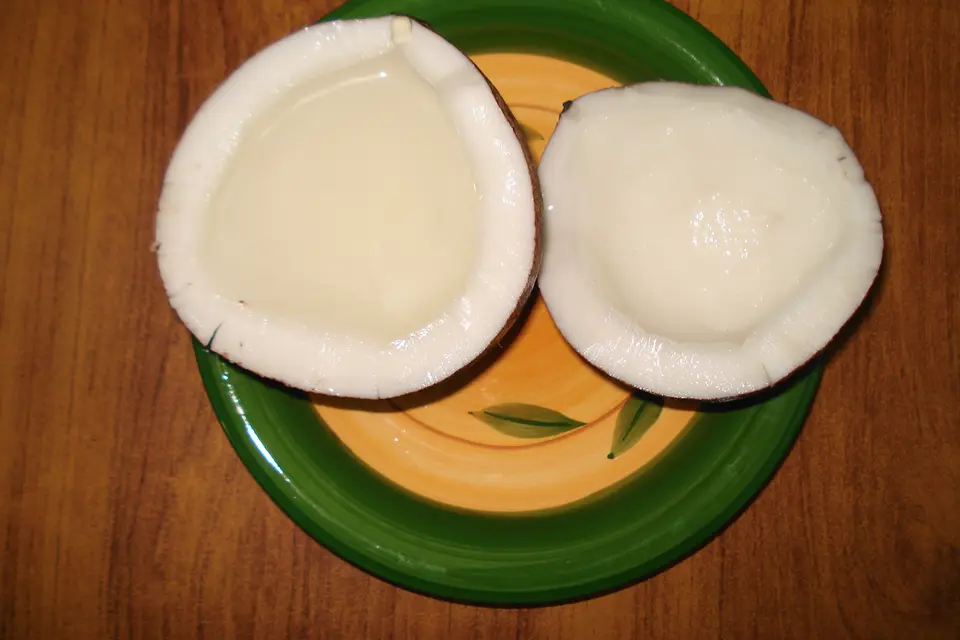
They share a name but they’re different products. USDA describes canned coconut milk as the liquid expressed from grated coconut meat and water. The carton drink is much thinner: USDA lists it at 94.6% water, against 72.9% for canned. The USDA entry we use for it is a sweetened, calcium-fortified drink, with values taken from a label.
| Per 1/4 cup | Canned coconut milk (about 56 g) | Coconut milk drink, sweetened (about 60 g) |
|---|---|---|
| Calories | About 111 | About 19 |
| Total fat | About 12.0 g | About 1.2 g |
| Saturated fat | About 10.7 g | About 1.2 g |
| Protein | About 1.1 g | About 0.1 g |
| Sugars | Not listed | About 1.5 g |
| Calcium | About 10 mg | About 113 mg |
These are our figures, scaled from USDA’s per-100 g data using its cup weights (226 g canned, 240 g drink). For a smaller splash, USDA lists 1 tablespoon of canned coconut milk at 15 g, which works out to about 30 calories, 3.2 g of fat and 2.8 g of saturated fat. Brands vary, and “lite” cans and unsweetened cartons will differ, so check your label. The calcium in the drink comes from fortification, not from the coconut.

How much saturated fat is that?
The FDA sets the Daily Value for saturated fat at 20 g. By that yardstick:
- 1 tablespoon of canned coconut milk: about 14%.
- 2 tablespoons: about 28%.
- 1/4 cup of canned coconut milk: about 53%.
- 1/4 cup of the carton drink: about 6%.
A small splash of canned milk is a modest amount. A generous pour is not. If your healthcare provider has told you to limit saturated fat, choose the carton drink or use less.
Does coconut milk affect green tea’s catechins?
We don’t know. No study we found tested coconut milk, and the research on other milks is mixed.
- Studies disagree. A 2017 review of lab and human studies calls the evidence on adding milk to tea conflicting, and says differences in tea, milk type and amount, preparation, lab methods and sample size may explain it. We cover those studies in can you put cream in green tea.
- A human study of green tea extract: 24 healthy women drank a test drink of green tea extract with or without skim milk, caseinate or soy protein. EGCG absorption fell to 63% to 76% of the control level, but absorption of two other catechins, EGC and EC, rose.
- A lab study: green tea made with 50% bovine, soy or rice milk kept more of its catechins through simulated digestion, 52% to 69% against under 20% for plain tea. No people were tested, and coconut milk wasn’t one of the milks.
Coconut milk has very little protein, about 2 g per 100 g for canned and about 0.2 g per 100 g for the drink, by USDA. The human study above points to proteins as the issue, so we’d guess coconut milk binds less catechin. That’s our inference, not a tested result, and the lab study above, where milk raised catechin recovery, is a reminder that it could go either way. Our green tea with almond milk page looks at another low-protein milk. Neither study above tested almond milk either.
Are there benefits to coconut milk tea?
We found no study that says so, and we won’t invent one. The National Center for Complementary and Integrative Health says definite conclusions can’t yet be reached on whether green tea helps with most of the things it’s used for. What coconut milk adds is practical: a creamy texture, calories and fat, and calcium if you choose a fortified drink.
How do you make green tea with coconut milk?
This makes one mug of about 8 oz. The amounts are our starting points, so adjust them to taste.
- Heat 8 oz of water to 170°F to 180°F, the range Salada suggests for green tea.
- Steep one green tea bag or 1 teaspoon of loose tea for 2 to 3 minutes, then remove it.
- Stir the can well, then measure 1 to 2 tablespoons of canned coconut milk. Or use 1/4 cup of a carton coconut milk drink.
- Stir it into the hot tea. Warm the milk first if you like your tea very hot.
- Sweeten only if you want to.
For iced tea, chill the brewed tea, stir in the coconut milk and pour over ice. Want a spiced version? Add a few slices of ginger, as in our ginger and honey green tea. If you want a lighter coconut drink without milk, see green tea with coconut water.
Who should be careful?
- Sweetened drinks: the USDA carton entry is sweetened. Check the label for added sugars, since the FDA’s Daily Value for them is 50 g.
- Coconut allergy: the FDA no longer considers coconut a major food allergen for labeling, so it may not appear in a “Contains” statement. It still has to be in the ingredient list, though the FDA notes an exemption: a natural coconut flavor can be listed simply as “natural flavor.” If you have an allergy, ask your allergist.
- Caffeine: Mayo Clinic lists about 29 mg for 8 oz of brewed green tea. Coconut milk doesn’t change that. NCCIH says caffeine in pregnancy shouldn’t exceed moderate levels, so ask your provider about your limit.
- Medication: NCCIH says green tea at high doses can lower blood levels of nadolol, a beta-blocker used for high blood pressure. Ask your pharmacist if you drink it often.
For more ideas, browse our green tea blends.
More on blends & add-ins
- Green Tea With Coconut Water: Can You Mix Them?
- Green Tea With Cucumber: What Does It Add?
- Green Tea With Ginger and Honey: What Are the Benefits?
- Green Tea With Lemon: What Does Lemon Add?
- Green Tea With Mint: Benefits, Caffeine and How to Make It
- Can You Put Cream in Green Tea?
- Green Tea With Almonds: Almond Milk, Flavor and Benefits
Sources
- Nuts, coconut milk, canned (liquid expressed from grated meat and water), USDA FoodData Central
- Beverages, coconut milk, sweetened, fortified with calcium, vitamins A, B12, D2, USDA FoodData Central
- Daily Value on the Nutrition and Supplement Facts Labels, U.S. Food and Drug Administration
- Addition of milk to tea infusions: Helpful or harmful? Evidence from in vitro and in vivo studies on antioxidant properties, Critical Reviews in Food Science and Nutrition
- Simultaneous ingestion of dietary proteins reduces the bioavailability of galloylated catechins from green tea in humans, European Journal of Nutrition
- Common tea formulations modulate in vitro digestive recovery of green tea catechins, Molecular Nutrition & Food Research
- Frequently Asked Questions: Food Allergen Labeling Guidance for Industry, U.S. Food and Drug Administration
- Green Tea, National Center for Complementary and Integrative Health
- Caffeine content for coffee, tea, soda and more, Mayo Clinic
- Brew Tea Temperature and Steeping Guide, Salada Tea