Green Tea and Apple Cider Vinegar: What Does the Evidence Say?
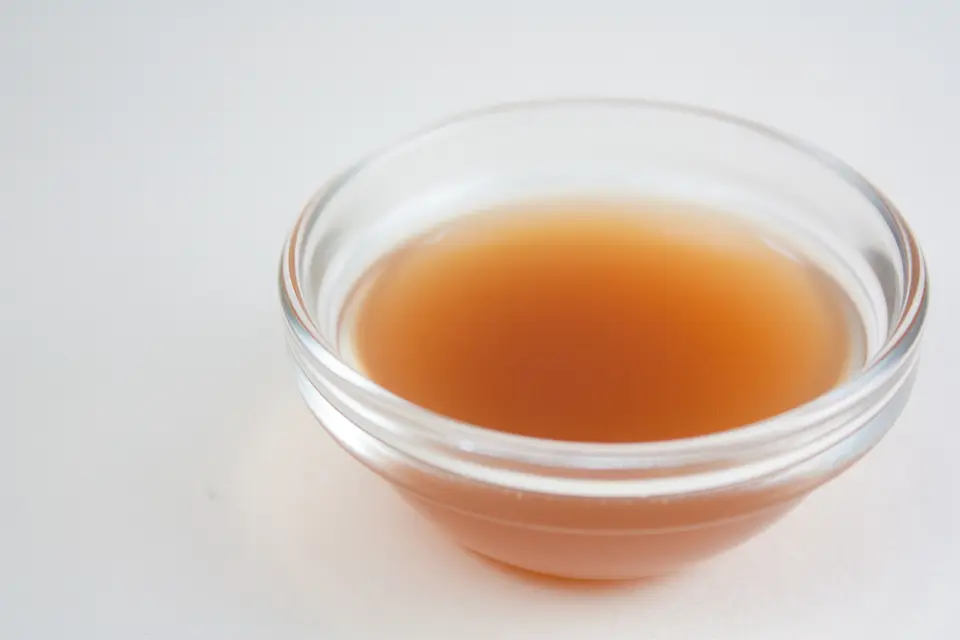
We found no study of green tea and apple cider vinegar together. Small, short trials of vinegar alone point to modest changes in weight and blood sugar, but the evidence is mixed, and Harvard Health says it doesn't support apple cider vinegar for weight loss. If you try it, dilute it well: undiluted vinegar can harm teeth and throat.
On this page
People mix green tea and apple cider vinegar hoping for weight loss or steadier blood sugar. We searched PubMed and found no study of the two together. So the question is what each one has behind it, and what the risks are. The vinegar trials below used vinegar alone, not in tea.
Does green tea with apple cider vinegar help weight loss?
We can’t promise that, and the evidence is thin on both sides of the mug.
The tea. The National Center for Complementary and Integrative Health (NCCIH) says the catechins and caffeine in green tea and its extracts may have a modest effect on body weight. It also says definite conclusions can’t yet be reached for most of green tea’s uses.
The vinegar. The trials are small and short:
- A 2009 Japanese trial: a randomized, double-blind trial in obese Japanese adults gave a daily 500 mL drink containing 15 mL of vinegar, 30 mL of vinegar or none, for 12 weeks. Weight, BMI, visceral fat area, waist size and triglycerides were lower in both vinegar groups than in the placebo group. The abstract doesn’t say the vinegar was apple cider, doesn’t give the number of participants, and lists the first author at a company’s research institute.
- A 2025 review: it pooled 10 randomized trials of 26 to 126 people each, all adults with overweight, obesity or type 2 diabetes. Doses were 5 to 30 mL a day of liquid, or tablets, for 4 to 12 weeks. On average, weight, BMI and waist size were lower than in comparison groups. The authors flag large differences between trials, short durations and signs of possible publication bias, and call for longer trials.
One of the trials in that review, a 2024 study in Lebanese adolescents and young adults, was retracted by BMJ Nutrition, Prevention & Health on September 23, 2025. The journal’s notice says the authors’ analyses couldn’t be replicated, multiple errors were found, and the dataset showed patterns inconsistent with random allocation. The review was published on September 19, 2025, four days earlier, and still counts that trial, so treat its pooled result with extra caution. We don’t use the retracted trial’s results here. Cleveland Clinic’s apple cider vinegar page, dated May 2025, still mentions it. Meanwhile, Harvard Health says scientific evidence doesn’t support apple cider vinegar for appetite or weight loss. Cleveland Clinic says there’s no concrete evidence of long-term appetite benefits.


Does it help blood sugar?
Possibly a little, in trials, and the results vary.
- A 2025 review of people with type 2 diabetes: 7 trials with 463 adults, using 13.75 to 30 mL a day of apple cider vinegar with about 5% acetic acid for 4 to 12 weeks. Fasting glucose and HbA1c were lower than in comparison groups. The authors rated five of the seven trials as low quality because of high risk of bias, graded the certainty of the HbA1c result as low, and found it inconsistent between trials.
- A 2021 review: 9 studies in adults found smaller changes, about 8 mg/dL lower fasting glucose and 0.5 points lower HbA1c, with large differences between trials. In apparently healthy people, fasting glucose appeared to rise.
Cleveland Clinic’s dietitian says the effect on glucose is small. If you take diabetes medicine, ask your provider before adding vinegar regularly. Don’t use it in place of your medicine.
What are the risks of apple cider vinegar?
Vinegar is acidic. USDA lists cider vinegar at 5% acetic acid.
- Teeth: Harvard Health says drinking undiluted vinegar can erode tooth enamel over time, and Cleveland Clinic says worn enamel can’t be restored. A lab study put slices of human enamel in five vinegars for up to 8 hours and found mineral loss, though its authors warn that mouths differ from a dish. The abstract doesn’t list apple cider vinegar among the five. Cleveland Clinic’s dietitian advises watering it down, about a tablespoon in a mug of warm water, to cut the acid reaching your teeth and throat.
- Throat: Cleveland Clinic says straight, undiluted vinegar can burn the esophagus. A case report describes a 15-year-old who drank a commercial vinegar drink daily without enough dilution and had esophageal ulcers. That’s one patient, but it’s a reason to dilute.
- Medicines: Cleveland Clinic says vinegar can interact with some medicines, including insulin, diuretics (water pills), laxatives and certain blood pressure medicines, and that people with low potassium shouldn’t use it because it could make that worse. If you take any prescription, ask your doctor or pharmacist first.
- Reflux, stomach and children: Harvard Health says people prone to heartburn should avoid acidic drinks 30 to 60 minutes before sleep. Cleveland Clinic says vinegar slows gastric emptying, so people with gastroparesis should be careful, and that pure vinegar should be kept away from children.
- Caffeine and pregnancy: Mayo Clinic lists about 29 mg of caffeine for 8 oz of brewed green tea. NCCIH says caffeine in pregnancy shouldn’t exceed moderate levels, so ask your provider about your limit.
How do you make a diluted green tea with apple cider vinegar?
This makes one mug of about 8 oz. The amounts are our starting points, and Cleveland Clinic’s advice is to start with a few drops and build up.
- Heat 8 oz of water to 170°F to 180°F, the range Salada suggests for green tea.
- Steep one green tea bag or 1 teaspoon of loose tea for 2 to 3 minutes, then remove it.
- Let the tea cool until it’s comfortable to sip.
- Stir in a few drops to 1 teaspoon of apple cider vinegar. Cleveland Clinic suggests about a tablespoon in a mug as a diluted amount and no more than 2 tablespoons a day. By USDA’s figures, a tablespoon has about 3 calories.
- Never drink the vinegar straight from the spoon or bottle.
For iced tea, chill the brewed tea first, then add the vinegar and pour over ice. If it tastes too sharp, try a squeeze of lemon, as in green tea with lemon, or a slice of ginger, as in ginger and honey green tea. Our orange green tea page has another fruit pairing.
For more on what green tea can and can’t do, see our green tea health guide.
More on health questions
- Which Green Tea Has the Highest EGCG? Brands vs Tea Types
- Can You Be Allergic to Green Tea?
- Can You Drink Green Tea on the Carnivore Diet?
- Does Green Tea Break Autophagy?
- Does Green Tea Have Electrolytes?
- Green Tea With Lemon: What Does Lemon Add?
- Green Tea With Ginger and Honey: What Are the Benefits?
- Orange Green Tea: Benefits and How to Make It
Sources
- Effect of Apple Cider Vinegar Intake on Body Composition in Humans with Type 2 Diabetes and/or Overweight: A Systematic Review and Meta-Analysis of Randomized Controlled Trials, Nutrients
- Vinegar intake reduces body weight, body fat mass, and serum triglyceride levels in obese Japanese subjects, Bioscience, Biotechnology, and Biochemistry
- Effects of apple cider vinegar on glycemic control and insulin sensitivity in patients with type 2 diabetes: A GRADE-assessed systematic review and dose-response meta-analysis of controlled clinical trials, Frontiers in Nutrition
- The effect of apple cider vinegar on lipid profiles and glycemic parameters: a systematic review and meta-analysis of randomized clinical trials, BMC Complementary Medicine and Therapies
- Retraction: Apple cider vinegar for weight management in lebanese adolescents and young adults with overweight and obesity: a randomised, double-blind, placebo-controlled study, BMJ Nutrition, Prevention & Health
- Can apple cider vinegar curb appetite?, Harvard Health Publishing
- What Apple Cider Vinegar Can (and Can't) Do for You, Cleveland Clinic
- In vitro study on dental erosion caused by different vinegar varieties using an electron microprobe, Clinical Laboratory
- Corrosive Esophageal Injury due to a Commercial Vinegar Beverage in an Adolescent, Clinical Endoscopy
- Vinegar, cider, USDA FoodData Central
- Green Tea, National Center for Complementary and Integrative Health
- Caffeine content for coffee, tea, soda and more, Mayo Clinic
- Brew Tea Temperature and Steeping Guide, Salada Tea